No play in poker generates more adrenaline than the all-in. You push all your chips into the middle, your opponent decides, and within seconds the outcome of a single hand defines hours of play. But behind that dramatic moment lies a mathematical logic that separates players who go all-in by strategy from those who do it on impulse.
This guide explains exactly what the all-in in poker means, when it makes sense, when it doesn’t, and which mistakes cost entire stacks for players who haven’t mastered the move yet.
What is an all-in in poker?
Going all-in means betting all of your chips on a single decision. From that moment on, you can no longer take any action on the following streets. If your opponent calls, you see the remaining community cards without participating in any further betting: win and you double your stack, lose and you leave the hand (or the tournament) with nothing.
The all-in exists in every poker variant, but it carries special weight in tournaments, where losing your stack means immediate elimination. In cash games you can rebuy chips and keep playing. In a tournament, it’s the end of the line.
Worth remembering: an all-in doesn’t have to be a bluff or an extreme value bet. Quite often it is simply the only play that is mathematically consistent with your stack size and the pot odds involved.
Why is the all-in the most dramatic play in poker?
The all-in condenses the entire essence of poker into a single moment: risk, math, reads, and courage. No other card game delivers that combination with such intensity.
The psychological side matters too. Going all-in or facing an all-in puts a player in a unique emotional state. The temptation to call out of curiosity, the fear of folding a marginal hand, the euphoria of nailing a read — all of it concentrated into seconds. Players who control those emotions make better decisions. Players who don’t hand EV straight to their opponents.
That’s why understanding the all-in is understanding poker itself in its purest form.
When to go all-in: the scenarios where it makes sense
There are four main scenarios in which the all-in is the correct play.
Short stack in tournaments
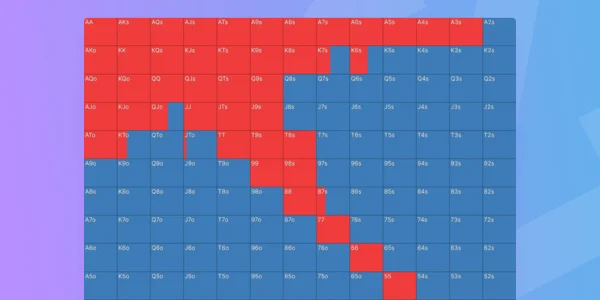
Once you drop below 15 big blinds, your stack no longer allows complex maneuvers. Your options become push/fold: you go all-in with the range that makes sense for your position, or you give up the hand. Sitting on a short stack without acting is one of the most common mistakes among players who haven’t mastered late-stage math.
Value with a premium hand against a committed opponent
When you hold a very strong hand and your opponent has shown real interest in the pot, the all-in maximizes value. If they were willing to call medium-sized bets, they will probably call the all-in as well. Leaving money on the table out of fear of “scaring off the opponent” is pure negative EV.
Semi-bluff with strong equity
Combined draws (a flush draw plus an open-ended straight draw, for example) frequently carry enough equity to justify all-ins as semi-bluffs. You win the pot immediately if your opponent folds, and you still have real chances of completing your hand if they call. It’s the classic scenario where the math favors aggression.
Pure bluff with high fold equity
In specific situations, against opponents who have shown a genuine ability to fold, the pure all-in bluff works. A board that favors your story, an opponent marked by conservative decisions, a consistent hand history since preflop. Without those factors, a pure all-in bluff is just betting everything on hope.
When NOT to go all-in: the mistakes that cost entire stacks
The wrong all-in destroys more bankrolls than any other type of mistake in poker. Recognizing these scenarios is essential.
All-in out of frustration. After a losing streak or a bad beat, the temptation to “win it all back in one hand” is common. That kind of decision never comes from rational analysis. If you notice signs of tilt, stop immediately. It’s worth reading our article on emotional control in poker to understand how to neutralize that impulse before it costs your stack.
All-in against calling stations. Bluff-shoving against opponents who call anything is literally setting money on fire. Before considering a big bluff, ask yourself: has this player folded even once this session? If the answer is no, bluffing is off the table.
All-in in multiway pots. With three or more opponents in the hand, the chance that at least one of them has something worth calling with increases drastically. All-in bluffs in multiway pots rarely work, and the few cases where they do demand extremely precise reads of the ranges involved.
All-in without a coherent story. If your line in the hand makes no sense, your opponent will read the bluff. Betting small on the flop and turn and then shoving the river with nothing is one of the most readable patterns in amateur poker. An all-in needs to make sense within the story you’ve been telling since preflop.
Preflop vs postflop all-in: strategic differences
The moment you go all-in completely changes the logic of the decision.
Preflop, the all-in usually happens for one of two reasons: a short stack (push/fold) or a clash between two premium hands. In both cases, the decision is mathematically objective. You calculate your equity against your opponent’s range and decide.
Postflop, the complexity explodes. Now you have information about the board, the betting history, and your opponent’s reactions on earlier streets. Every element weighs on the decision. A river all-in follows a completely different logic from a flop all-in, because there are no more cards to come.
Mastering postflop all-ins requires a deep understanding of EV, ranges, and bet sizing. Without that foundation, you’re just betting on the hope that your opponent folds.
How the all-in works in tournaments with ICM
In tournaments, chips don’t have linear value. Near the bubble or at the final table, ICM (Independent Chip Model) drastically changes the EV calculation. A play that would be mathematically correct in a cash game can be disastrous in a tournament when ICM is in effect.
The practical rule is simple: the closer you are to the money, the more conservative you need to be with marginal all-ins. Surviving is worth more than doubling up in many spots. Understanding tournament metrics like ITM and ABI helps you calibrate when to take the risk and when to hold back.
Ignoring ICM is the most expensive mistake made by technically competent players who don’t yet think of tournaments as a system.
Fold equity: the concept behind every well-executed all-in
Fold equity is the probability that your opponent gives up the hand. When you go all-in, your expected value doesn’t come only from your chance of winning at showdown. It also comes from the chance that your opponent folds before showing their cards.
The more fold equity you have, the more viable the all-in becomes as a bluff or semi-bluff. The less fold equity, the more the all-in needs to justify itself on pure value.
This means the same all-in can be correct against one player and completely wrong against another. Reading your opponent is what separates a calculated play from a gamble. That’s why identifying patterns and leaks in your opponents is what allows you to calibrate fold equity with precision.
Classic beginner mistakes when going all-in
Four mistakes show up frequently among players who haven’t mastered the move.
The first is going all-in “to stop thinking.” When the hand gets complicated and the player doesn’t know what to do, shoving everything becomes an escape from the decision. Poker demands exactly the opposite: thinking more in difficult hands, not less.
The second is misjudging stack sizes. A 3-big-blind all-in against a 100-big-blind stack makes sense in almost no context. Before pressing the button, evaluate the relative size of your stack and your opponent’s.
The third is ignoring position. An all-in out of position with no information on your opponent is dramatically worse than an all-in in position, with all the information already available.
The fourth is defaulting to all-in in tournaments with a short stack without considering the bubble factor, ICM, and the villain’s range. Push/fold looks simple, but it takes dedicated study to apply correctly.
Conclusion
The all-in in poker is not about courage or impulse. It’s about math, reads, and timing. The best all-in plays happen when the player can rationally justify every element: their stack, their range, the opponent’s range, position, tournament stage, and the fold equity involved.
Players who master these elements make all-in decisions that hold up in the long run, even when an individual result goes badly. Players who don’t are just shoving chips on luck.
Lobbyze centralizes everything your grind needs in one place: tournament selection, smart alerts, bankroll control, performance metrics, and complete management of your operation. No spreadsheets, no chaos, no guesswork.
Lobbyze doesn’t play for you. It makes you play better.