The history of poker is marked by mystery, diverse cultural influences, and a remarkable ability to adapt over time. Today, poker is recognized worldwide as a game that combines strategy, skill, math, and psychology.
But to understand how it reached that status, you need to look at its origins, its evolution, and the impact of technology on how the game is played.
Read also:
- How to Bluff in Poker: When and How to Use It
- Poker Series Coming Up? Build Your Schedule in Minutes with Lobbyze
- 5 Mistakes That Hurt Your Poker ROI
The origins of poker and its early influences
When we talk about how poker came to be, there’s no single definitive answer. Most historians point to roots in several different traditions. One of the most cited predecessors is the Persian game As Nas, played in the 16th century, which already used betting and card combinations. In Europe, games like the French Poque and the German Pochen also contributed to the formation of modern poker.
These games arrived in North America through European colonizers. It was mainly in the United States, in the early 19th century, that poker began to develop its own identity, played widely on the steamboats navigating the Mississippi River. In this context, the history of poker blends with the spirit of the Old West, the saloons, and the cash games of the frontier era.
The evolution of poker rules and formats
The evolution of poker is directly tied to the standardization of rules. Initially played with only 20 cards, poker moved to a full 52-card deck, allowing more combinations and greater strategic complexity. It was during this period that classic hands like straight, flush, and full house were established.
Over time, different types of poker emerged, like Five Card Draw, Seven Card Stud, and later, Texas Hold’em — which would become the most popular variant in the world. Each new format brought important changes to the game’s dynamics, expanding the skill factor and reducing pure reliance on luck. (See: is poker luck or skill?)
The rise of major poker tournaments
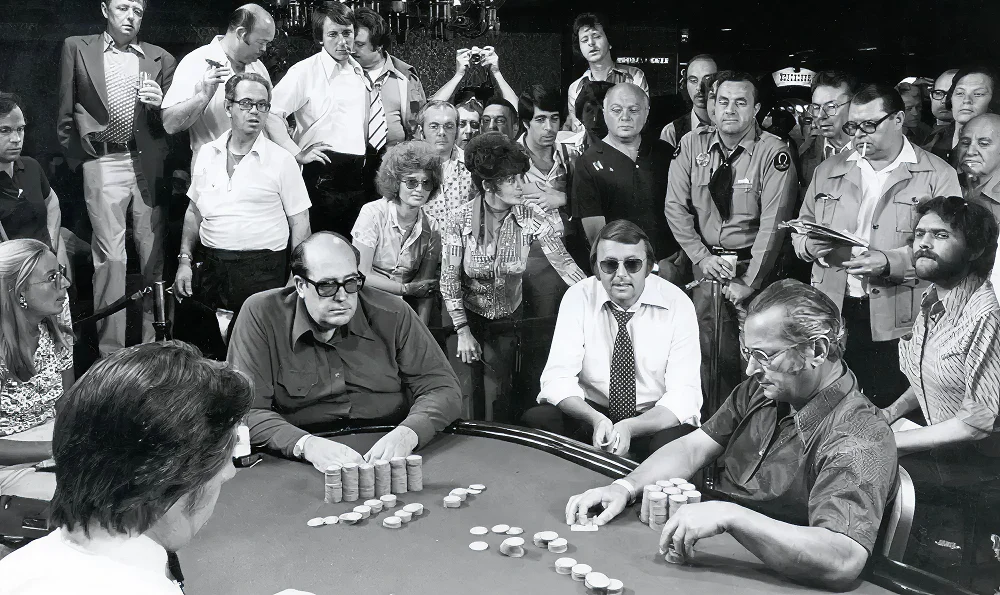
A fundamental milestone in the poker timeline was the creation of large tournaments. In 1970, the World Series of Poker (WSOP) was born in Las Vegas — an event that helped transform poker into an internationally recognized mind sport. From that moment on, professional players began to gain recognition, and poker stopped being seen as just a casual game.
Television played a crucial role in this process, especially with the introduction of hole cameras that show players’ cards. That brought the audience closer to the game, made strategies easier to understand, and made poker more appealing to new players.
The boom of online poker and the digital era
The history of online poker begins in the late 1990s and explodes in the early 2000s with the rise of the internet. Digital platforms allowed players from all over the world to compete against each other, at any time, without leaving home. This factor was decisive for the global popularization of the game.
Online poker also democratized access, offering low-stakes tables, affordable tournaments, and study tools that accelerated learning. It also enabled the rise of a new generation of players, many of whom started in the virtual environment before moving to live tournaments.
Conclusion
The history of poker is a journey of constant transformation. From its uncertain origins to its consolidation as a global phenomenon, the game has evolved in rules, formats, and platforms.
The evolution of poker, driven by tournaments and the digital revolution, shows that poker is much more than a simple card game: it’s a cultural, strategic, and social practice that keeps reinventing itself and winning new audiences around the world.
Want to experience poker in practice? Now that you know the history of poker and understand how the game evolved to where it is today, it’s time to take the next step.
Visit Lobbyze and find tables, tournaments, and content built for those who want to play with more strategy, security, and fun. Whether you’re a beginner or an experienced player, Lobbyze connects you to the best opportunities in online poker.
Read next: