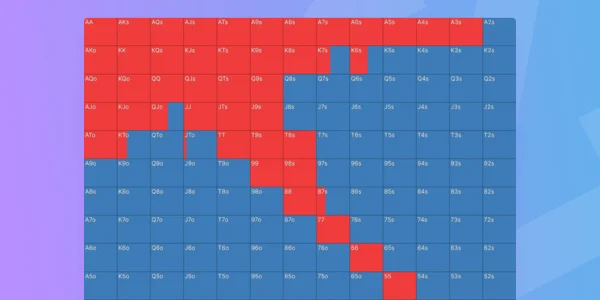
Knowing how to choose poker tournaments properly is fundamental for any player who wants to start their journey in competitive poker intelligently and sustainably. Correct tournament selection can determine the success or failure of your first experiences, directly impacting skill development and the preservation of your bankroll.
Why tournament selection matters from the start
Choosing inappropriate poker tournaments can result in unnecessary losses and early frustration. Beginners frequently make the mistake of joining events that are too advanced or have unfavorable structures, hurting their learning. Poker tournaments for beginners should prioritize skill development over immediate profits, building a solid foundation for future growth.
Beyond that, playing tournaments compatible with your current technical level lets you make decisions more calmly, better understand table dynamics, and absorb important concepts like positioning, opponent reading, and emotional control.
Appropriate buy-ins for beginners
The buy-in value should represent at most 5% of the total bankroll dedicated to poker. For first poker tournaments, the recommendation is to start with low-stakes events, generally between $1 and $11. This approach allows you to play multiple tournaments without significantly compromising your budget — essential for handling poker’s natural variance.
Field, structure, and variance
The number of participants and the blind structure dramatically influence the playing experience. Poker tournaments for beginners should have smaller fields (up to 500 players) and slower structures, giving you more time to make decisions.
Events with blinds rising every 8–10 minutes offer a better learning environment compared to turbos, which require fast decisions and more experience.
Avoiding common tournament selection mistakes
Many beginners are attracted to profitable poker tournaments with big prize pools, ignoring factors like field size and competition level. Events with thousands of participants have extremely high variance, making it hard to reach paid positions consistently. Prefer regional tournaments or those with smaller fields, where competition is less fierce and opponents’ mistakes are more frequent.
The importance of aligning tournaments with your bankroll
Bankroll management is the most critical aspect when deciding how to choose poker tournaments. Set clear limits: never join a tournament whose buy-in represents more than 5% of your bankroll. For first poker tournaments, consider being even more conservative, limiting yourself to 2–3% per event. This ensures enough longevity to overcome the game’s variance and downswing periods.
Diversify between formats: freezeouts to learn discipline, rebuys to practice stack recovery, and Sit & Go to develop final table skills. Each format teaches different aspects of the game and contributes to more complete evolution.
Conclusion
Mastering proper tournament selection is a skill that develops with experience, but following basic guidelines from the start significantly accelerates the learning process.
Prioritize events with favorable structures, buy-ins compatible with your bankroll, and fields appropriate to your experience level.
Remember: profitable poker tournaments are the ones where you can compete consistently and sustainably with a meaningful ROI — not just those offering the biggest prizes.
Manage your tournaments centrally, tracking results in real time and optimizing your strategies with Lobbyze!
Read next: