Every poker player, without exception, has gone on tilt. The difference between those who evolve and those who stay stuck at the same stakes for years isn’t who tilts and who doesn’t — it’s who recognizes tilt quickly and acts to neutralize it before it destroys an entire session.
In this article, you’ll understand exactly what tilt in poker is, why it happens, what the main types are, how to identify it at the first signs, and what to do to regain control, both at and away from the table. More than that: you’ll learn to prevent tilt before it even has a chance to appear.
What is tilt in poker?
Tilt in poker is any mental or emotional state that makes you play worse than you normally do. The term comes from pinball, where tilting the machine too hard triggered the “tilt” error and locked the game. In poker, the concept is practically the same: something destabilizes you, and from that point on, your decisions stop being rational.
The most useful definition of tilt doesn’t necessarily involve anger or frustration. Tilt is any deviation from your optimal game caused by emotional factors. That means you can be on tilt without even noticing — playing slightly worse, slightly looser, slightly more aggressive than you should.
And that’s precisely the dangerous part. Obvious tilt — the kind where you shove all-in with seven-two after a bad beat — is easy to recognize. Subtle tilt, the kind that makes you call a marginal bet because you “have a feeling,” is what bleeds bankrolls silently, session after session.
Why do players go on tilt?
Tilt doesn’t happen by chance. It has identifiable triggers, and knowing them is the first step to preventing the problem.
The most common trigger is the bad beat. You play a hand technically perfectly, you’re winning until the river, and an improbable card takes your pot. The apparent injustice of the moment activates an emotional response that can contaminate the next hands — or the entire session.
Another frequent trigger is the losing streak. Losing several consecutive hands, even while playing well, builds accumulated frustration. Each new loss seems to confirm the idea that “nothing is working,” which distorts your objective read of the game.
Fatigue is also a silent trigger. Sessions that run too long reduce cognitive capacity and increase emotional vulnerability. Decisions that would be trivial with a rested mind become serious mistakes when the brain is exhausted.
Playing outside your bankroll is another factor that creates the perfect environment for tilt. When the amount at stake is bigger than you can absorb psychologically, every decision carries excessive emotional weight. Proper bankroll management is therefore one of the main prevention tools against tilt.
Finally, external triggers count too. Arguments before the session, unresolved personal problems, everyday frustrations — all of it can be latent when you sit at the table, waiting for just one spark to activate the tilt state.
Types of tilt: rage tilt, frustration tilt and desk tilt
Tilt isn’t a single state. There are variations with distinct causes and manifestations, and identifying which type is affecting you helps you choose the right recovery strategy.
Rage tilt is the best-known and most obvious type. It happens when a specific situation, usually a brutal bad beat, generates immediate anger. Decisions become impulsive, aggressive, driven by a desire for “revenge” against the game or a specific opponent. It’s the tilt that shows up in YouTube videos with red-lettered captions.
Frustration tilt is more subtle — and more dangerous precisely because of it. There’s no explosive anger; there’s a gradual buildup of frustration that deteriorates your decisions over several hands or entire sessions. You don’t notice you’re on tilt, you just feel that “nothing is going right” and start making increasingly marginal decisions.
Desk tilt is the tilt that happens when the physical environment or session conditions are wrong. An uncomfortable chair, a poorly positioned monitor, constant distractions, inadequate temperature. You’re not on emotional tilt, but your performance drops because the basic conditions for concentration weren’t secured.
Other less-discussed types include winner tilt (when you’re winning a lot and start feeling invincible, taking unnecessary risks), revenge tilt (focused on beating one specific opponent), and boredom tilt (playing hands you should fold just because you’re bored). They all share the same principle: some emotional or environmental force is pulling you away from your optimal game.
The signs that you’re on tilt
Most players don’t realize they’re on tilt until the damage is already done. Learning to recognize the signs early is the most valuable skill for limiting the harm.
Repetitive thoughts about past hands are one of the first signs. If you can’t stop mentally revisiting a specific hand while others are happening, your attention is already compromised.
Internal justifications for questionable decisions are another sign. When you catch yourself thinking “he’s probably bluffing” without real evidence, or “I’ll call because I’ve already invested so much in the pot,” you’re likely rationalizing emotional decisions.
An increase in the frequency of hands played reveals tilt almost mechanically. If you normally play 18% of hands and suddenly you’re playing 28%, something is off. Tracking your performance metrics during and after sessions makes it easier to spot these deviations.
Impulse-driven sizing changes are another indicator. Increasing bets because you’re “irritated” or decreasing them to “protect yourself” after a loss shows that bet size is no longer being determined by the board and your opponent’s range, but by your emotional state.
Physical symptoms appear too: tension in the shoulders, accelerated heartbeat, shallow breathing, difficulty concentrating. The body usually notices tilt before the mind consciously recognizes it.
The earlier you identify these signs, the greater the chance of neutralizing tilt before it turns a recoverable session into a disaster.
How does tilt destroy your game in practice?
The impact of tilt on financial results is dramatic — and often underestimated.
Studies with professional players suggest that a single session on severe tilt can wipe out the profit of several previous sessions played in a normal state. The math is cruel: you spend hours building marginal edge, and lose it all in minutes when decisions turn emotional.
In practice, tilt drastically increases the volume of hands played (you get looser), reduces the quality of postflop decisions (you ignore pot odds and opponent profiles), and leads to disproportionate bets (purposeless overbets, unnecessary all-ins). Each of these behaviors alone is already harmful. Combined, they’re devastating.
Another less obvious effect is the contamination of tournament selection decisions. Players on tilt frequently move up in stakes trying to “recover fast,” which multiplies the risk instead of solving it. This pattern is one of the main causes of bankroll ruin among developing players.
Tilt also damages decision-making in situations where you would normally get it right. Spots that call for a fold become calls. Spots that call for a value bet become passive checks. The consistency of your game is lost, and with it goes the edge you built through study and practice.
Strategies to regain control during the session
When you recognize you’re on tilt in the middle of a session, what do you do? There are specific strategies that work, and they need to be applied before the damage accumulates.
The first and most effective is to pause immediately. Get up from the chair, go drink some water, breathe deeply for five minutes. That simple pause interrupts the emotional cycle and gives the brain a chance to return to a more analytical state.
The second is to reduce volume. If you’re playing six tables, close three. Fewer simultaneous decisions mean more attention for each one, and that alone already improves the quality of your game.
The third is to end the session when the tilt is severe. Continuing to play on tilt is like driving drunk: you may think you’re fine, but statistically it’s a terrible idea. Clear stop losses, defined before the session starts, help you make that decision without emotional rationalization. If you want to go deeper into this strategy, there’s a complete guide in the article on stop loss in poker.
The fourth is to run a quick check on your last three to five decisions. Were they based on objective reads or on emotion? If you can’t justify them rationally, it’s time to stop.
Finally, breathing and mindfulness techniques work for many players. Five conscious deep breaths before each important decision keep the nervous system in a calmer state. The article on poker as a mental game explores these techniques in more depth.
How to prevent tilt before it happens
The best strategy against tilt is not letting it happen. That’s possible with a set of practices that drastically reduce emotional vulnerability.
A pre-session routine is the first pillar. Arrive at the table rested, fed, hydrated, and in an environment prepared for concentration. Five to ten minutes reviewing hands from the previous session or studying a specific concept put the brain in the right mode. The ideal pre-grind and post-grind routine covers this process in detail.
An adequate bankroll is the second pillar. Playing stakes compatible with your bankroll reduces the emotional weight of each individual loss. When a defeat represents 1% of your bankroll, it hurts less than when it represents 20%. That simple math explains much of the emotional difference between well-structured players and financially squeezed ones.
Clear session limits work as automatic protection. Deciding before you start that you’ll play at most three hours, or stop after losing five buy-ins, or end the session after any bad stretch, takes the decision out of the heat of the moment.
Accepting variance is perhaps the most important pillar of all. Those who understand that variance in poker is a structural part of the game, not an exception, suffer far less from bad beats. They stop being injustices and become expected statistical events.
Regular study completes the picture. Players who deeply understand their numbers, their decisions, and their tendencies build confidence based on data, not short-term results. That confidence is a natural buffer against tilt.
The relationship between tilt and prolonged downswings
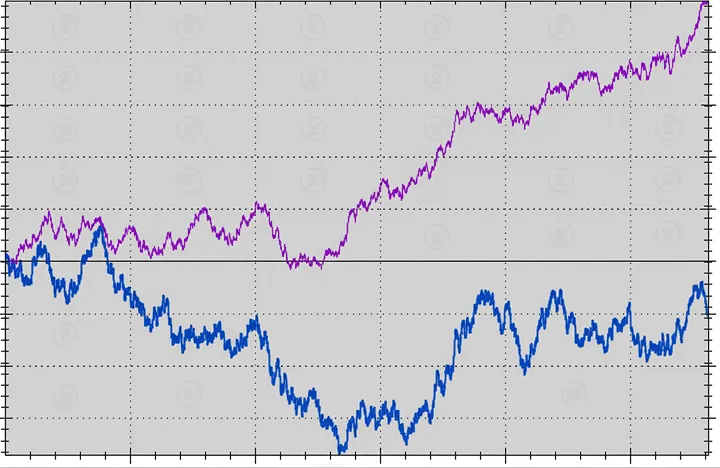
Here’s an uncomfortable truth: tilt is frequently more responsible for long downswings than variance itself.
A purely statistical downswing has an end. You play your A-game, lose to bad luck for a period, and eventually results return to the mean. A tilt-fueled downswing, on the other hand, becomes a vicious cycle. You lose, you tilt, you play worse, you lose more, you tilt more, you play even worse. The bottom keeps getting deeper.
The good news is that this cycle can be broken. Recognizing that the downswing is being amplified by tilt, and not just variance, is the first step to getting out of it. In many cases, the best decision is to stop playing for a few days, review your game objectively, and return only when your mental state is clear.
If you want to explore this relationship between natural variance and tilt-amplified variance, there’s a complete analysis in the article on long downswings in poker.
Conclusion
Tilt in poker isn’t weakness — it’s the human part of the game. Every player, from beginner to professional, is subject to it. The difference lies in how each one deals with the problem.
Recognize the triggers. Identify the signs early. Have strategies ready to neutralize tilt when it appears. Build routines that prevent its arrival. And above all, accept variance as a structural element of the game, not a personal enemy.
Those who master emotional control play on another level — not because they make magical decisions, but because they make consistent decisions even when everything around them is chaotic. And consistency, in poker, is what separates those who evolve from those who stay stuck at the same stakes forever. To complement this mental work, check out the article on emotional control in poker and build a solid foundation to sustain your decisions even in the toughest moments.