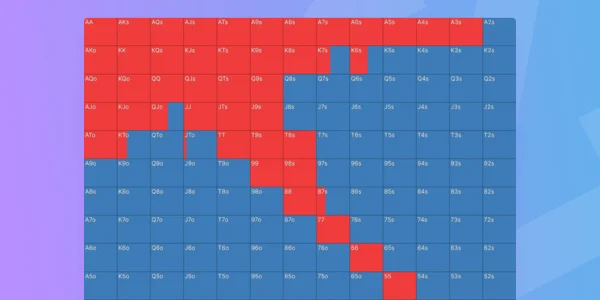
Poker goes beyond simple entertainment with cards to become one of the most powerful schools of decision-making in existence.
Unlike other games based purely on luck, decision-making in poker demands constant analysis, risk management, and emotional control — fundamental skills both for the table and for professional and personal life.
Why poker is a real laboratory for decision-making
The poker environment perfectly replicates the challenges of real life: incomplete information, time pressure, and immediate financial consequences. Every hand presents a unique scenario where players must evaluate probabilities, interpret behaviors, and make poker decisions based on limited data.
This constant exposure to uncertainty naturally develops the ability to process information quickly and act under pressure. The poker table becomes a laboratory where every decision is tested instantly, providing immediate feedback on the quality of your decision-making process in poker.
The importance of the long term in decision quality
One of the most valuable lessons poker teaches is the difference between result and process. In the short term, correct decisions can produce negative outcomes due to the game’s natural variance. That reality forces players to develop strategic thinking in poker focused on the quality of decisions, not just immediate results.
This long-term perspective is revolutionary for decision-making in any area of life. Learning to evaluate decisions by the logic applied — not just by the result obtained — builds a more resilient, strategic mindset for facing professional and personal challenges.
Common decision-making mistakes that poker reveals
Poker relentlessly exposes the main decision-making mistakes that also harm our everyday choices. Emotional tilt — when we allow negative emotions to influence our decisions — is perhaps the most destructive of these patterns.
Other common tendencies include overvaluing recent experiences, the tendency to avoid losses even when mathematically incorrect, and the difficulty of letting go of investments already made. Recognizing these patterns at the table develops crucial self-awareness for identifying them in other situations.
How to apply poker lessons to life and business
The poker lessons for life are directly transferable to the corporate environment and personal decisions. Bankroll management teaches financial discipline and risk management. Reading opponents develops emotional intelligence and non-verbal communication skills.
Professionals who apply poker principles frequently demonstrate greater negotiation ability, better stress management, and more objective decisions in high-pressure situations. The ability to calculate pot odds, for example, can be adapted into cost-benefit analyses for investments and business projects.
Conclusion
Poker offers a unique environment for developing decision-making skills that transcend the game table. Through constant practice in situations of pressure and uncertainty, players build valuable competencies like analytical thinking, emotional control, and long-term perspective.
These lessons, when consciously applied to professional and personal life, can significantly transform the quality of our choices — and, consequently, our results.
Poker in the long run demands control and data-based decisions. Try Lobbyze for free and evolve your playing routine.
Read next: