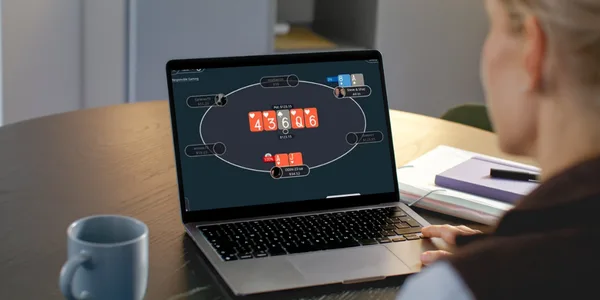
There is a point in every tournament player’s career when the spreadsheet stops working. You open five lobbies at once, try to compare start times by hand, forget to register for something important, and miss late registration by seconds. That is the moment you realise the operation has outgrown what a manual method can hold.
At that point, poker tournament software stops being a luxury and becomes infrastructure. Not because you want to look professional, but because there is no other way to run real volume without multiplying mistakes, missing opportunities and burning mental energy on tasks that should be automatic.
This guide explains what poker tournament software actually does, why it became standard among modern grinders, which features genuinely matter, and how to pick the right solution for where you are in your career.
What is poker tournament software?
Poker tournament software is any tool specialised in helping players manage their online tournament operation. Unlike trackers (which focus on post-session analysis) or HUDs (which focus on reading opponents), this category covers everything that happens before, during and after your schedule.
Before: tournament selection, schedule planning, registration alerts.
During: tracking tables in play, alerts for late registration closing, real-time information about structure.
After: results analysis, metric calculation, performance comparison by site and format.
The core promise is simple: centralise in one interface what is currently spread across dozens of lobbies, spreadsheets and your own memory.
Schedule software, tracker, HUD or solver: which one do you need?
Most articles about poker tools throw every category into the same list, which is why players buy the wrong thing. These four solve different problems and none of them replaces another.
Schedule and management software answers “what should I play, and when”. It reads the live tournament schedule across sites, filters it, alerts you and records what you registered for.
Trackers (PokerTracker 4, Holdem Manager 3) answer “how did I play”. They store hand histories and let you review sessions afterwards.
HUDs answer “who is this opponent” while a hand is live. In tournaments their value is limited by sample size, which is worth understanding before you rely on one — our guide to the poker HUD covers exactly where it helps and where it does not.
Solvers (GTO Wizard, PioSolver) answer “what was the theoretically correct line” away from the table.
A player with three trackers and no schedule tool is still missing tournaments. A player with a schedule tool and no review process is still repeating the same leaks. The categories stack; they do not substitute.
Why tournament software became standard
A few years ago it was common to see professional grinders running on complex spreadsheets, phone alarms and memory. It worked, more or less, with plenty of mistakes along the way.
Today that approach is close to impossible for anyone playing real volume, and the reason is simple arithmetic.
Site fragmentation. A grinder in 2026 has easy access to PokerStars, GGPoker, 888poker, partypoker, WPN/ACR, Winamax, WPT Global, Nexa Poker, Chico Network, iPoker and others. Each with its own interface, its own start times, its own special series. Managing that by hand is not merely inefficient, it is mathematically impractical.
Calendar growth. The major 2026 series keep breaking records. PokerStars launched its New Year Series with $18M guaranteed. GGPoker ran the Bounty Hunters Series with $80M guaranteed. SCOOP, WCOOP, WSOP Online and smaller series run simultaneously. The monthly calendar holds hundreds of tournaments relevant to different profiles.
Competitive baseline. Once tools become standard among the best players, anyone operating without them works at a consistent disadvantage. That is not opinion, it is a measurable edge in volume, selection and execution.
Cognitive cost. Every minute spent managing logistics is a minute taken from study, execution or rest. Serious grinders cannot afford to burn energy on tasks software solves.
Essential features of good poker tournament software
Not every tool in this category delivers the same thing. A few features are genuinely central.
Centralised schedule. Every tournament from every connected site in a single view, with filters for buy-in, format, start time, minimum guarantee and site. Without this, the tool is just a prettier spreadsheet.
Smart alerts. Automatic notifications when important tournaments are about to start, when late registration is closing, when blind levels change. Everything you should no longer have to remember yourself.
Direct lobby access. Selecting a tournament inside the tool opens the right client at the right event. It removes several clicks and the risk of registering for the wrong thing.
Real-time information. Current blinds, players remaining, prize pool, chip lead, time to next level — all visible without opening each table one by one.
Bankroll control. Automatic recording of buy-ins, cashes and cumulative ROI. You stop maintaining parallel spreadsheets and start seeing real data as it happens.
Performance metrics. ROI, ITM%, ABI, hourly rate and result distribution by format and site. Without these you are operating on feel rather than data. It pays to connect this analysis with core numbers such as ITM and ABI to see the full picture you need to follow.
Team management. For anyone running a stable, a team or a staking operation: multi-player management, activity auditing and aggregated reporting.
Site coverage. Broad coverage of the sites where relevant volume actually happens. Limited coverage makes a tool partially useful, which is often worse than using none at all.
What separates good tournament software from bad
Not every tool on the market deserves to be installed. A few objective criteria separate serious solutions from amateur attempts.
Site coverage. Software supporting only two or three sites serves very specific cases. Modern grinders need broad coverage including the main international rooms.
Technical stability. A tool that freezes, lags on real-time data or loses information is actively harmful. Better no tool than an unstable one.
Constant updates. Sites change, new tournaments appear, special series launch all the time. Software that is not updated regularly goes stale within months.
Intuitive interface. If you need two hours of tutorials before you can start, something is wrong. Good tools have a reasonable learning curve and get more powerful as you master them.
Community and support. Serious software has an active user channel, responsive support and decent documentation. Abandoned software eventually stops working.
Justifiable price. The cost has to pay for itself in real ROI. For serious grinders, good software pays for itself in the first month through tournaments that would otherwise have been missed or badly selected.
Calculating the ROI of poker tournament software
A few concrete calculations show why these tools pay for themselves quickly.
Tournaments missed through inattention. A mid-volume grinder misses between 3 and 8 tournaments a month for logistical reasons (forgetting, late reg closing first, an unnoticed schedule clash). If the average buy-in is $30 and ROI is 15%, each missed tournament is $4.50 of lost EV. Multiplied by 5 per month, that is $22.50 a month and $270 a year in pure EV left on the table.
Sub-optimal tournament selection. Without a consolidated view, grinders often play worse structures simply because they never saw the better spot available. The EV difference between the optimal tournament and a sub-optimal one can be 20–40% of base ROI.
Time recovered. The average grinder spends 30–60 minutes a day managing tournament logistics. With good software that drops to 5–10 minutes: 10–15 hours a month returned to study, execution or rest.
Fewer errors and less tilt. Less logistical overload means a lower chance of making bad decisions under pressure. Hard to quantify directly, but significant over time.
Add those factors together and serious software at a reasonable monthly cost pays for itself several times over within the first few months of proper use.
How software changes your operation as a grinder
The impact of good software goes beyond the numbers. It changes the mental structure of the operation.
From reactive to planned. Without a tool, you react to whatever appears in the lobby. With one, you plan the week in advance, pick specific targets and execute on purpose.
From chaotic to organised. Tournaments scattered across five sites, alarms on your phone, an out-of-date spreadsheet, an overloaded memory — all of it disappears once the software takes over the organising.
From guesswork to patterns. You start seeing patterns in your own data. Which formats do you play best? Where is your ROI highest? At which times of day do you perform? Without data those questions do not exist. With data they drive strategy.
From amateur to professional. A player who manages the operation like a business plays a different game. Every decision becomes informed by data rather than feel. That is the jump separating players who stall from players who keep improving — the piece on organisation as a competitive edge goes deeper into why this shift is decisive.
How to choose the right tournament software
If you have read this far and are considering adopting a tool, a few guidelines help with the choice.
Start with site coverage. List the sites where you play (or intend to play) and check whether the tool covers all of them, or at least the main ones. Software covering 90% of your sites is dramatically better than software covering 50%.
Check the essential features. Confirm the features listed above are present: centralised schedule, alerts, metrics, bankroll control. Software missing those is not worth it regardless of price.
Test before committing long term. Most good tools offer a free trial. Use that window to test under real conditions, not to browse menus.
Look at community and support. Join the tool’s community channel before subscribing and see how existing users talk about it. Constant complaints about bugs, failures or absent support are red flags.
Weigh cost against your volume. If you play 10 tournaments a month, expensive software makes no sense. If you play 100+, almost any serious tool pays for itself quickly.
Check recent updates. A tool last updated 6+ months ago is probably abandoned. Good software ships updates monthly or more often.
Lobbyze as poker tournament software
Since this guide is published on the Lobbyze blog, it would be strange not to say where the platform sits in this market.
Lobbyze was built specifically to solve the problems described throughout this article. All the essential features listed above — centralised schedule, smart alerts, bankroll control, performance metrics, team management — are implemented as one integrated product.
Site coverage includes PokerStars, GGPoker, partypoker, Bodog, 888poker, iPoker, Chico Network, Winamax, WPN Network, PokerStars.ES, 888poker.PT, WPT Global, CoinPoker and SupremaPoker. In practice that covers nearly every room where meaningful grinder volume happens, and it is why the schedule we publish tracks more than 5,000 tournaments a day across 13 rooms.
The commercial model includes a free plan that already delivers real value (bankroll control and a freeroll list), so players can try it before paying for advanced features.
More important than any specific platform, though, is the change in mindset: adopting management software is a statement that you treat poker as a serious operation rather than a pastime. That statement, made inside your daily process, is what separates careers that grow from careers that stall.
Complementary tools in the modern arsenal
Tournament software does not replace the other essentials. A professional grinder’s full stack in 2026 typically includes:
Tournament management software (such as Lobbyze) for organisation, selection and metrics.
A tracker (PokerTracker 4, Holdem Manager 3) for post-session analysis and complete hand history.
A HUD for reading opponents in real time, where the site allows it.
Solvers (GTO Wizard, PioSolver) for theoretical study of specific spots.
SharkScope or similar for opponent research and tournament history — see what SharkScope is for how that fits.
A review process for structured analysis of hands and sessions.
Each piece covers a different angle of the professional game. Tournament software covers organisation and management; the others cover study, analysis and execution. Together they form the stack serious grinders use to scale. Our overview of essential poker tools maps the whole arsenal.
Common mistakes when adopting tools
Five mistakes show up consistently among players starting out with software.
Choosing by brand rather than fit. Famous software is not necessarily better for you. Fit with your operation matters more than popularity.
Not configuring it properly. Powerful software badly configured delivers less than simple software configured well. Time invested in setup pays dividends for months.
Ignoring advanced features. Many users touch 20% of what is available. Exploring the secondary features often reveals significant efficiency gains.
Keeping manual processes in parallel. Adopting software and still maintaining spreadsheets doubles the work without doubling the benefit. Commit to the tool or do not use it.
Not connecting it to strategy. Software is a means, not an end. Without clarity on strategy — which tournaments to play, when, with what bankroll — a tool only organises the chaos instead of removing it. The piece on grind planning with weekly and monthly goals is essential for getting the most out of any tool.
Conclusion
Poker tournament software is not a gadget for players who want to look professional. It is the infrastructure separating those who run an operation from those who run on feel. In 2026, with the online tournament scene expanding and hundreds of competing options every day, operating without it means operating at a systematic disadvantage.
There is no perfect tool for everyone. There is a right tool for your profile, volume and ambition. Start by testing serious alternatives, judge the fit with your operation, commit to what you choose and use it fully. Within a few weeks you will look back and wonder how you ever operated without it.
The bottom line is simple: anyone treating poker as a profession needs professional tools. Anyone treating it as a pastime can carry on with a spreadsheet and a phone alarm. That choice defines the path your career takes over the next few years.