The temptation to register for every tournament available on online poker platforms is strong — especially when there’s an endless variety of options, schedules, and attractive prizes.
But is it worth playing every online poker tournament that shows up?
The short answer: no. In the long run, strategic tournament selection is what separates a recreational player from a profitable grinder. Below, understand why.
Why not every online poker tournament is worth your time (or your buy-in)
Not every tournament offers the same expected return. Some have bad structures, very competitive fields, or disproportionate prize distributions.
Playing indiscriminately may feel like volume, but in practice it’s a waste of energy and bankroll. The secret lies in understanding how to choose poker tournaments that fit your playing style, financial limits, and ROI goals.
A winning player focuses on data-based tournament selection: how many players usually take part, what the average duration is, and how rake impacts profitability.
How to identify tournaments that boost your poker ROI
ROI in online poker (Return on Investment) is the key performance indicator. It shows the percentage of profit earned relative to the amount invested.
To increase it, look for profitable poker tournaments with good structure and recreational players — the so-called soft fields. Avoid MTTs with expensive rebuys or hyper-turbos that reduce your edge.
To dive deeper into the subject, check out educational content on tournament strategy and money-making approaches in online MTTs.
Also pay attention to:
- Tournament times: peak traffic hours attract more recreational players.
- Compatible buy-ins: playing above your bankroll reduces ROI.
- Format: tournaments with bounties and progressive KOs require strategic adjustments.
The risks of playing a random schedule without strategy
Efficient tournament schedule management is essential. Playing a random schedule is one of the biggest mistakes when building your poker schedule. It causes:
- mental fatigue;
- destroyed focus;
- compromised decision-making.
The ideal is to maintain a predictable routine, with fixed times and a number of tables you can comfortably manage.
Without planning, the player loses control over volume, profit, and even learning — playing just for the sake of playing.
Criteria for choosing good online poker tournaments
When making your tournament selection, evaluate:
- Blind structure — the slower it is, the more room there is for skill.
- Field size — medium fields (300–800 players) balance risk and reward.
- Rake (%) — tournaments with high rake reduce ROI.
- Less popular poker sites — these sites typically have weaker fields.
- Regularity — daily, consistent tournaments make results analysis easier.
How to build a poker schedule optimized for profit and volume
Poker schedule strategy consists of planning a tournament routine aligned with your profile and financial goals.
Build a balanced schedule: mix MTTs with different formats, times, and variance levels.
Use specialized software to record buy-ins, cashouts, and average ROI. That way, you understand where you’re winning and where you’re burning chips.
Tools that help you select online poker tournaments with more EV
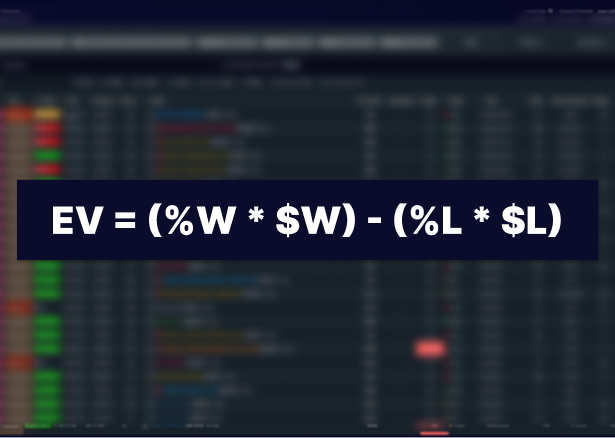
Today, there are tournament schedule management tools that automate the process. They let you filter by buy-in, site, time, structure type, and even estimate the EV (Expected Value).
Platforms like Lobbyze, for example, assist with profitability analysis, letting you optimize your schedule based on real data.
Read next: