In the competitive world of professional poker, the difference between profitable players and those who simply survive often lies in organization and discipline.
A well-structured poker tournament calendar isn’t just a planning tool — it’s the fundamental foundation for a sustainable and profitable career in poker. The absence of this organization can turn even the best talents into inconsistent and financially unstable players.
Why a tournament calendar directly impacts your results
Building an efficient poker tournament schedule lets players identify the most profitable spots and avoid impulsive decisions. Without proper planning, it’s common to see players entering tournaments unsuited to their bankroll level or missing opportunities in events with better expected value.
A structured calendar also promotes consistency in study and preparation. Knowing exactly which tournaments are coming, you can dedicate specific time to reviewing relevant strategies, analyzing recurring opponents, and adjusting tactics according to the specific format of each event.
The relationship between organization, volume, and ROI
Smart grind planning establishes a direct correlation between organization and profitability. Players with well-defined calendars manage to balance volume and selection, avoiding both the trap of overgrinding and paralysis from excessive selection.
Poker tournament organization also enables the identification of seasonal patterns and specific opportunities. Events with weaker fields, special promotions, and series with overlays become more visible when there’s an adequate organizational system to map and consistently exploit them.
Aligning calendar, bankroll, and variance
Effective tournament schedule management must consider not just the theoretical value of events, but also the impact of variance on your available bankroll. Higher buy-in tournaments may be mathematically superior, but inappropriate for the player’s specific financial moment.
The calendar should reflect a natural progression of stakes and formats, allowing gradual growth without excessive risk exposure. This includes reserving periods for smaller buy-in tournaments during downswings and increasing aggression during controlled upswings.
Common mistakes when building a tournament calendar
The most frequent mistake is overestimating your own volume capacity, creating unrealistic schedules that lead to burnout. Another common error is ignoring external factors like time zones, personal commitments, and the need for rest between intense sessions.
Many players also make the mistake of not reviewing and adjusting their calendars regularly, keeping outdated plans that don’t reflect changes in the market, bankroll, or their own performance.
Tools that help structure and maintain your tournament schedule
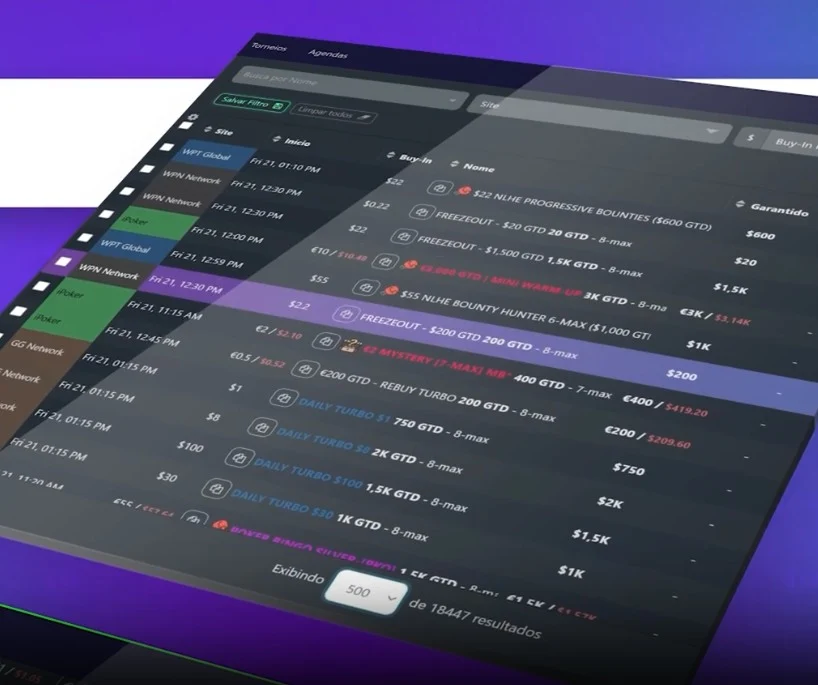
Lobbyze stands out as one of the most complete tools for organizing online poker calendars. The platform centralizes tournaments from multiple rooms in a single interface, allowing filters by buy-in, format, time, and overlay potential.
Its main advantage is automatic synchronization with major platforms, eliminating manual searches. Users can create custom alerts, receive change notifications, and track data like field size and prize pools.
In addition, Lobbyze offers advanced analyses that identify profitability patterns by day, time, and tournament type — turning planning into a strategic, data-driven process.
Conclusion
A well-structured tournament calendar is much more than an organizational tool — it’s the difference between a professional and amateur approach to poker.
Investing time in creating and maintaining an efficient schedule doesn’t just improve immediate financial results; it establishes the foundations for a sustainable, profitable long-term career.
Discover Lobbyze!
Read next: