Having a well-structured poker tournament schedule is one of the pillars of success for anyone who plays professionally or semi-professionally.
Building a good poker schedule isn’t just a matter of organization — it’s a strategy that directly impacts ROI in online poker, playing volume, and, of course, long-term profitability. Understand more below.
Why building a good tournament schedule makes a difference in your results
An efficient schedule lets you balance volume, focus, and consistency. Playing random tournaments can produce occasional wins, but it compromises financial control and strategic learning.
With well-planned poker tournament selection, players better understand their strengths, avoid mental fatigue, and maximize return per hour played.
In addition, grind planning prevents wasting time on low-EV (expected value) tournaments.
The goal is clear: turn every session into a sustainable profit opportunity, aligned with the player’s profile and bankroll.
How to identify truly profitable tournaments in online poker
The most profitable poker tournaments aren’t necessarily the ones with the biggest prizes. They’re the ones where the field is weaker, the structure is fairer, and the cost-benefit fits your reality.
Some signs of profitable tournaments include:
- Recreational field: events with many casual players and accessible buy-ins.
- Good blind structure: the slower it is, the more room for technical maneuvering.
- Frequent overlay: when the guarantee isn’t met, there’s extra value for the player.
- Strategic times: tournaments at hours with fewer regulars tend to be softer.
The secret is analyzing your results history and finding tournaments that produce positive ROI consistently.
Main criteria for building your tournament schedule
Building an efficient poker tournament schedule involves combining technical and practical factors. Consider:
- Historical ROI — focus on tournaments where you’ve already shown positive performance.
- Average duration — avoid excessive overlap that compromises concentration.
- Format — choose between regular, turbo, bounty, or progressive KO based on your style.
- Buy-in proportional to bankroll — keep between 1% and 2% of your bankroll per tournament.
- Mix of volume and quality — play enough to dilute variance, but without losing focus.
Good grind planning balances profit expectation with emotional consistency.
How to adjust your schedule based on ROI, volume, and bankroll
The market changes, and your poker schedule needs to evolve with it. If ROI starts dropping, investigate: did the field level go up? Did the structure change? Is the time affecting your performance?
When adjusting your schedule, consider:
- Average ROI per tournament — keep updated records.
- Hourly rate — prioritize events that produce better return per hour.
- Current bankroll — reduce buy-ins during downswings and gradually increase after upswings.
This flexibility is what separates amateur grinders from professionals.
Tools that help organize and optimize your tournament schedule
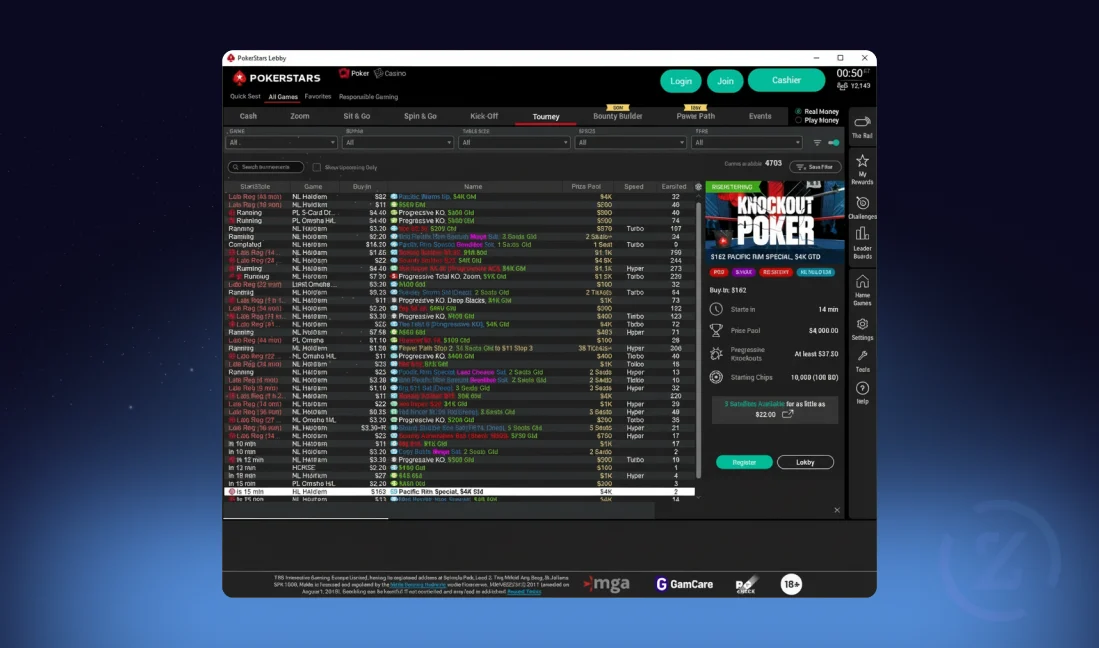
Today, specialized software replaces manual spreadsheets. Platforms like Lobbyze help build and adjust your schedule based on real data.
In summary, a well-planned poker tournament schedule is the bridge between casual play and professional poker. It turns random decisions into strategy and screen time into measurable results. Good game!
Read next: