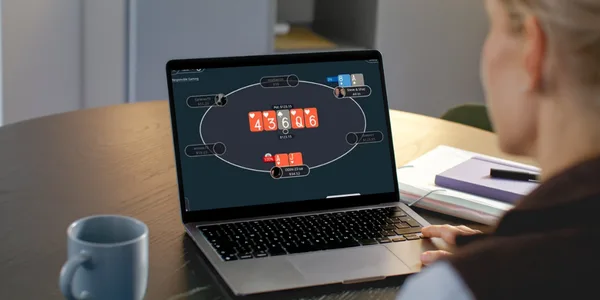
Building a professional poker schedule isn’t simple. Anyone who has organized a tournament knows that poker schedule management involves much more than seating players: you need to track eliminations in real time, reorganize seats, manage chip counts, handle registrations, and still deliver a high-level experience for every participant. For a long time, spreadsheets were the main tool for this. But the limits of that model became increasingly clear as tournaments grew in volume and complexity.
Today, dedicated poker tools have completely changed that landscape. Using specialized software to build a poker schedule has become the standard among organizers seeking efficiency, accuracy, and return on investment. In this article, we explain why this transition is necessary and how it directly impacts the quality of your events.
The limits of spreadsheets in poker
For years, spreadsheets were enough to organize small tournaments. With few players and few tables, you could control everything manually without major issues. But that model hits its limits quickly when scale grows.
The main problem with spreadsheets in poker schedule management is that they’re static. Every update needs to be made manually — an elimination, a table rebalance, a blind change. In tournaments with multiple tables running simultaneously, any delay in that update creates confusion among players and compromises the event’s rhythm.
On top of that, spreadsheets don’t offer real-time visibility. Players need to ask the organizer about their position in the schedule, the number of eliminations, the payout structure — information that should be automatically available. That dependency creates bottlenecks and overloads the organization team.
Another critical issue is vulnerability to human error. A cell filled incorrectly, outdated data, or a wrong calculation can cause disputes between players and damage the organizer’s credibility. In events with meaningful prize pools, this kind of mistake has serious consequences.
Finally, spreadsheets don’t scale. A tournament with 20 players can be managed that way. A tournament with 200 cannot.
Automation and grind efficiency
Grind automation is one of the biggest gains software brings to poker tournament organization. Tasks that previously required constant operator attention — monitoring chip counts, updating the schedule after eliminations, rebalancing tables as the field shrinks — now run automatically through the system.
That frees organizers to focus on what really matters: the player experience. Instead of updating spreadsheet cells with every elimination, the team can concentrate on customer service, communication, and the strategic aspects of the event.
In practice, consider this scenario: a tournament with 10 tables and 100 players. As eliminations happen, tables need to be consolidated to maintain player balance. With spreadsheets, that process requires manual calculation and individual communication with each table. With specialized software, the rebalancing happens automatically, with notifications sent to affected players in real time.
This grind automation also eliminates dead time between tournament phases. Transitions between blind levels, structure adjustments, and partial report generation happen without human intervention, keeping the tournament flowing within the planned schedule.
Also read: What Is a Freeroll in Poker and How to Play with Little Investment
Reducing human error
One of the strongest arguments for adopting dedicated poker tools is the drastic reduction in operational errors. Manual schedule management in poker is subject to failures ranging from incorrectly entered data to scheduling conflicts that compromise the entire tournament structure.
Tournament software operates with automated logic and real-time validations. When an elimination is recorded, the system updates the schedule, recalculates positions, and automatically checks whether tables need to be consolidated — all based on predefined rules, with no room for incorrect interpretation.
Beyond data accuracy, software offers transparency for all participants. Updated standings, table changes, and overall tournament progress are visible to players and spectators simultaneously. This visibility reduces disputes and creates a fairer, more reliable playing environment.
Data security is another important differentiator. Professional tournament organization platforms include protection mechanisms, authentication, and automatic backup. That ensures event information isn’t lost in case of technical failure — something spreadsheets simply don’t offer.
For tournaments with significant prize pools, this reliability isn’t just desirable: it’s indispensable. Players in serious events expect a level of professionalism that goes beyond what any spreadsheet can deliver.
Notifications and smart organization
Anyone who has organized a poker tournament knows what it’s like to chase down player after player to inform them their table changed — or to shout someone’s name across a noisy room to let them know it’s time to sit. That chaos doesn’t have to exist anymore.
Modern poker tools solve this problem once and for all with integrated notification systems. The player gets the alert directly on their device — table change, blind update, tournament status. The information arrives before they need to ask. This completely changes the event’s dynamics.
Integration with messaging bots has made this process even more natural. Instead of opening a website or checking a spreadsheet, the player accesses live rankings, leaderboards, and registration confirmations through apps they already use daily. The experience becomes more fluid, engagement grows, and the organization team breathes easier.
And there’s more: a system that works well for 50 players works equally well for 500. The structure scales with the tournament, without needing to hire more staff or create parallel processes. Growing stops being an operational problem and becomes just good news.
How Lobbyze improves your ROI
Building a poker schedule intelligently is one of the most important decisions a player or team manager can make. It’s no exaggeration to say that choosing the right tournaments can be the difference between a positive month and a losing one — even when the technical skill level is exactly the same.
Lobbyze was built to solve exactly that. Instead of spending hours browsing different platforms, comparing times, and trying to fit tournaments into your schedule, the player configures their filters once and the system builds the schedule for them. The time previously spent on manual research becomes available for what really matters: playing and improving.
In the middle of a grind, every decision counts. Knowing how many blinds remain in a tournament or predicting the end time in real time changes how you prioritize your tables. Lobbyze delivers that information at the right moment, without you having to switch between windows or run calculations in your head.
Financial tracking is also integrated. Tournaments played, prizes received, profits and losses — all in one place. With that organized history, it becomes much easier to identify which formats and buy-in ranges actually deliver returns for your playing profile, and adjust the schedule based on real data, not gut feeling. (See: ITM and ABI poker metrics)
For teams, the differentiator goes further. Lobbyze’s schedule audit cross-references the tournaments played with the player’s SharkScope and shows exactly where they deviated from the agreed schedule. No more management based on guesswork: the manager sees the deviations, talks with data in hand, and makes decisions that impact the collective result.
And all of this happens in a single environment, with tournaments from PokerStars, GGPoker, 888poker, partypoker, Winamax, WPT Global, and other platforms centralized in one place. No need to open ten tabs. No missing opportunities due to lack of visibility.
Conclusion
Spreadsheets played their role. For a long time, they were the best resource available for anyone wanting to organize their own schedule or manage a team. But poker has grown, volumes have increased, competition has gotten serious, and spreadsheets simply haven’t kept pace.
Today, anyone still relying on manual methods is playing with one hand tied behind their back. Not because it’s impossible, but because the time and energy spent on that management could be invested in something that actually moves the needle: study, volume, and strategic decision-making.
The right tools automate what’s operational, organize what’s financial, and illuminate what’s strategic. ROI improves not just because you play more good tournaments, but because you stop playing the bad ones.
If you don’t yet use software to build your poker schedule, this is the moment to change that. The difference between amateur and professional often isn’t only at the table.
Read next: