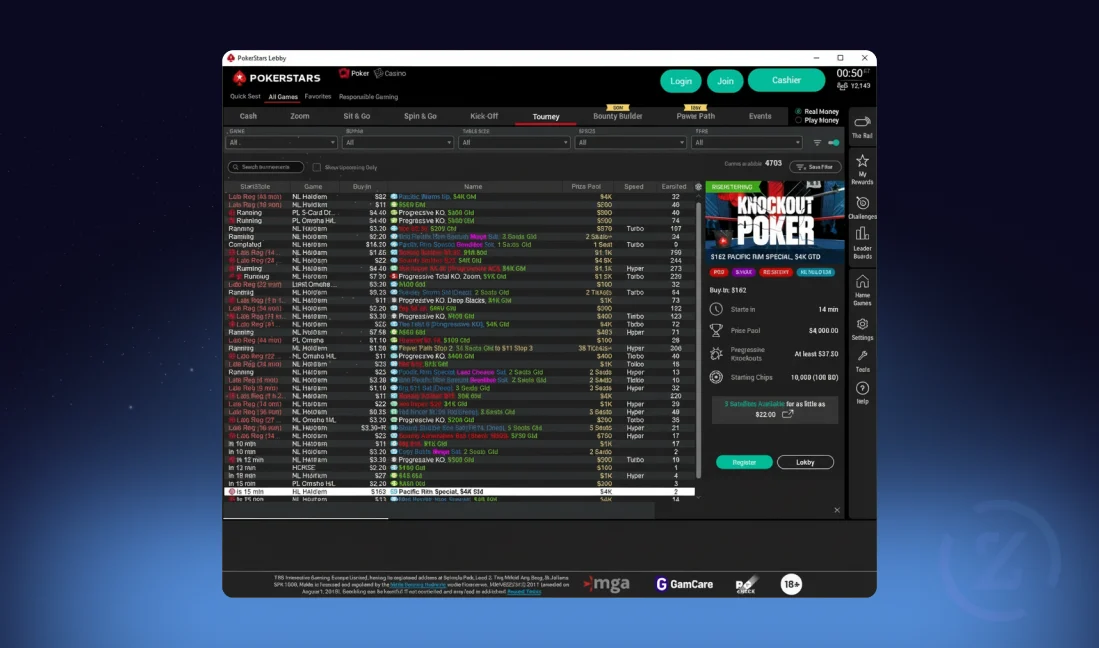
Understanding the differences between regular, turbo, and hyper tournaments is essential for any player who wants to optimize results in online poker. Each format has unique characteristics that directly influence strategy, variance, and profitability. Knowing these online poker tournament structures lets you choose events better suited to your profile, experience, and financial goals.
Read also:
- Online Poker for Beginners: First Steps Guide
- How to Calculate Your Hourly Rate in Poker Tournaments
What are regular poker tournaments?
Regular poker tournaments represent the traditional format, with a slower structure and enough time for elaborate decision-making. In these events, blind levels rise every 10–20 minutes, offering enough depth to develop complex strategies and make detailed reads of opponents.
This pace allows less experienced players time to analyze situations, calculate odds, and observe behavioral patterns. The starting stack usually offers 100–200 big blinds, giving plenty of room for post-flop maneuvering and creative play. Regular tournaments favor technical players who prefer to maximize their edge through superior skill.
How do turbo tournaments work?
Turbo poker tournaments significantly accelerate the pace, with levels rising every 5–8 minutes. This time compression forces faster decisions and reduces opportunities for elaborate reads. The starting stack maintains similar proportions to regulars, but the pressure of climbing blinds makes the game more aggressive from the early stages.
The increased speed favors experienced players who can make correct decisions quickly. Marginal spots become more common, demanding deeper knowledge of ranges and push/fold situations. Turbo tournaments offer a good balance between duration and strategic depth.
What characterizes hyper tournaments?
Hyper poker tournaments represent the most accelerated format, with levels changing every 3–4 minutes. The starting stack often offers only 10–25 big blinds, creating an environment where preflop decisions completely dominate the game. Push/fold math becomes essential from the very first levels.
These tournaments almost entirely eliminate post-flop play, focusing on starting hand selection, position, and timing of all-ins. The high speed results in extreme variance, with outcomes depending more on card distribution in coinflip spots than on differential skill. Hyper tournaments attract players looking for fast action and high volume.
Main differences in structure and blind speed
Online poker tournament structures vary drastically between formats. Regulars offer 100+ hands per level, turbos around 30–50 hands, while hypers are limited to 10–20 hands per stage. This difference deeply impacts the nature of decisions and the relative importance of different skills.
Average stack relative to blinds also varies: regulars maintain depth for longer, turbos balance speed and skill, hypers become shove/fold games quickly. Understanding these dynamics is crucial to adapting your strategy properly to each format.
Impact of speed on variance and ROI
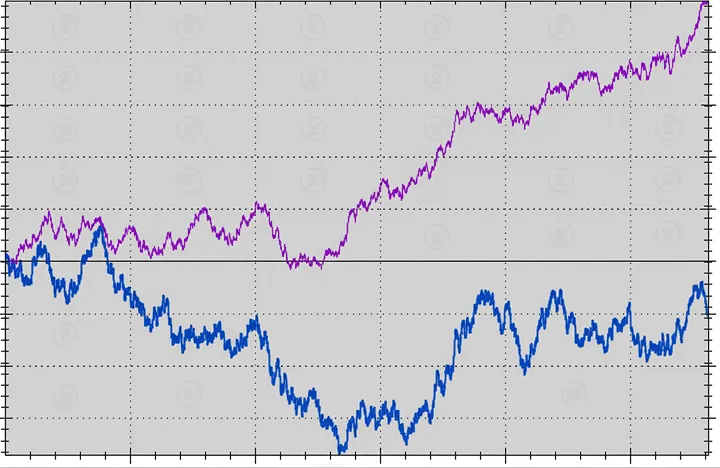
The speed of regular, turbo, and hyper tournaments directly affects variance and expected ROI. Regulars offer lower variance but require more time per event, reducing the volume you can play. Hypers maximize volume but dramatically increase variance due to the luck-based nature of frequent coinflip spots.
Turbos offer an interesting balance: they preserve reasonable skill expression while allowing adequate volume. For most players, turbos represent the sweet spot between profitability and time efficiency.
How to choose the ideal tournament for your profile and bankroll
The choice between online poker tournament structures should consider experience, bankroll, and goals. Beginners should focus on regulars to develop fundamental skills. Intermediate players can explore turbos to optimize volume. Hypers are suited for experienced grinders with a bankroll robust enough to absorb high variance.
More on: Poker Grind Planning: How to Set Weekly and Monthly Goals
Conclusion
Mastering the nuances of regular, turbo, and hyper tournaments lets you maximize results through proper event selection. Each format develops specific skills and offers unique opportunities, making it valuable to diversify your experience across different structures to become a complete player.
The tournament schedule from the main poker platforms in one place — try Lobbyze!
Read next: