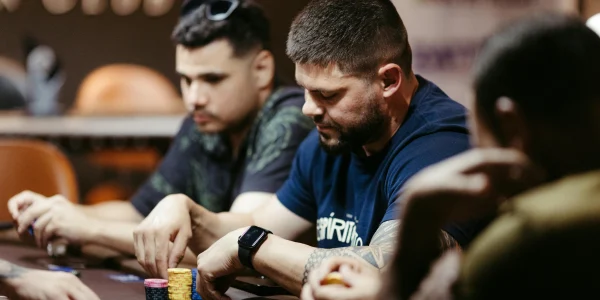
If you follow the Latin American poker scene, you’ve heard of the BSOP. If you’re discovering it now, you need to know it. The Brazilian Series of Poker is the biggest and most traditional live poker circuit in Brazil — a series that moves millions in prize money, brings together the country’s top players, and serves as the stage for career-defining moments.
This article covers everything about the BSOP: what it is, how it works, how to play it from home, and how to prepare in a structured way to compete in the events.
What is the BSOP?
BSOP stands for Brazilian Series of Poker, the main live poker tournament circuit in Brazil. Organized by PokerStars in partnership with local producers, the BSOP runs a series of stops throughout the year in different Brazilian cities, culminating in the Main Event — the flagship tournament that crowns the season’s national champion.
The circuit works like a league: each stop has official points, and players accumulate them throughout the year. The BSOP ranking determines the top players of the season and guarantees prizes and special invites for the leaderboard’s top finishers.
For Brazilian poker, the BSOP plays a role similar to what the WSOP represents globally — it’s the tournament every serious player wants to play at least once, and that the best aim to win consistently. Beyond the prestige, the prize pools are substantial: Main Events with guarantees of millions of reais (hundreds of thousands of USD) are common at the larger stops.
The BSOP also has relevance beyond national borders. Players who stand out on the Brazilian circuit often move on to international competitions, and the tournament serves as a thermometer for the level of Brazilian poker — which, by all accounts, is rapidly on the rise.
History of the Brazilian Series of Poker
The BSOP launched in the early 2000s, at a time when online poker was exploding globally and producing a generation of players eager to compete live. Brazil, with its competitive culture and a growing base of online players, was fertile ground for a structured circuit.
The first editions were modest compared to what the BSOP would become. Smaller fields, more contained prize pools — but already carrying the DNA that would define the series: professional organization, well-built blind structures, and an environment that mixed veterans with rising talent.
Over time, the BSOP grew in scale and reputation. Partnerships with international platforms brought more resources and visibility. The Main Events began attracting international players alongside the local crowd. And the circuit consolidated an annual calendar that players from all over Brazil — and abroad — started planning months in advance.
The evolution of poker tournaments worldwide had a direct impact on the BSOP. The rise of PKO formats, the popularization of high buy-in tournaments, and the integration with online poker transformed the series over the decades, keeping it relevant and competitive on the global stage.
Today, the BSOP is a reference not just in Brazil but throughout Latin America. It’s one of the best-organized circuits in the region and serves as a model for similar initiatives in other countries.
Event format: structure, buy-ins, and prize pools
The BSOP is a series with multiple events per stop, not just a single tournament. Each stop typically includes:
Main Event is the flagship and most prestigious tournament. Buy-ins range from R$1,500 to R$5,000 (roughly $300 to $1,000 USD) depending on the stop, with guarantees reaching millions of reais in the larger editions. The structure is deepstack — long levels, slowly rising blinds, plenty of room for technical play. It’s the tournament that defines the stop’s champion.
Side Events are secondary tournaments with smaller buy-ins, generally between R$300 and R$1,500 ($60 to $300 USD). They feature varied fields, different formats — freezeout, PKO, rebuy — and are excellent opportunities for players who want to compete in the BSOP environment without committing to the Main Event.
High Rollers are events for top-level players, with buy-ins above R$5,000 ($1,000+ USD) and small fields. They bring together the best players in the country and often attract international names.
Turbo and Hyper events round out each stop’s calendar with faster formats, ideal for players with less time available or who want to gain experience in different structures. The difference between regular, turbo, and hyper tournaments directly impacts strategy — the faster the structure, the closer the game gets to push/fold and the less room there is for post-flop maneuvering.
BSOP prize pools follow the international standard: between 10% and 15% of the field gets paid, with payouts heavily concentrated in the final positions. Making it to the final table of a BSOP Main Event represents a major financial turning point for any player.
BSOP Online: how to play from home
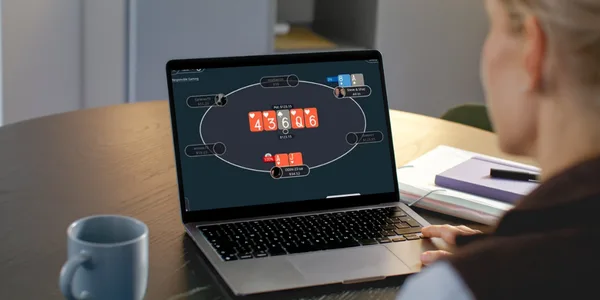
Beyond the live stops, the BSOP has an online presence through the PokerStars platform. The BSOP Online offers tournaments with the series’ branding, accessible from anywhere in Brazil — same organizational quality, no travel or accommodation needed.
The BSOP Online events follow the same structure as the live stops: an Online Main Event with a meaningful guarantee, side events with varied buy-ins, and leaderboards that count toward the national ranking. In some seasons, performance in online tournaments counts toward the overall circuit standings.
For players outside major cities — or who can’t travel for the live stop dates — the BSOP Online is the way to participate in the circuit without sacrificing competition quality. It’s also an excellent way to get familiar with the format before transitioning to live play.
Preparation for the BSOP Online is no different from preparation for any mid-to-high buy-in online tournament: rigorous bankroll management, careful selection of events that fit your profile, and schedule organization so you don’t miss important registrations.
Satellites for the BSOP: the most accessible route
Not every player has R$2,000 or R$3,000 ($400–$600 USD) available to invest directly in a BSOP Main Event. This is where satellites come in as a smart strategy.
Satellites are tournaments whose prize isn’t cash — it’s a ticket to a larger tournament. By winning a satellite to the BSOP Main Event, you receive the full entry to the main tournament, regardless of what you paid to play the satellite.
PokerStars frequently runs online satellites for BSOP stops, starting with buy-ins of just a few cents. The structure is tiered: you win a $5 ticket, use that ticket to play a $50 satellite, and use the $50 ticket to try to win the entry to the Main Event. Each tier multiplies your chance of reaching the main tournament with a much smaller initial investment.
For players still building their bankroll, satellites are the most efficient route to compete in high-level events without risking months of work on a single entry. Major BSOP winners over the years reached the Main Event via satellite — and walked away with prizes that changed their careers.
The key to using satellites efficiently is knowing the format’s specific strategy. Satellites have a different dynamic from regular MTTs: near the bubble, the goal isn’t to accumulate chips — it’s simply to survive and lock the ticket. Understanding this specific decision-making framework completely changes how you play the final stages of a satellite.
How to prepare for the BSOP with structured scheduling
Playing the BSOP — live or online — requires preparation that goes beyond poker strategy. Schedule organization, bankroll control, and energy management are just as important as playing well.
The first step is to define which events you’ll play in advance. The BSOP calendar is released weeks or months ahead. Planning ahead lets you choose the tournaments that best fit your profile and bankroll, without last-minute decisions that are usually worse.
The second step is preparing your bankroll. For the live Main Event, the recommendation is that the buy-in represents no more than 2% to 5% of your total bankroll — enough to play without financial pressure that contaminates your decisions. The same criterion applies to side events. Arriving at a BSOP stop with a tight bankroll is a recipe for playing scared, and fear at the poker table has a direct cost on results.
The third step is to build a tournament schedule for the stop’s days. A typical BSOP stop lasts several days, with events running in parallel at different times. Without planning, you risk missing registrations, stacking overlapping tournaments, or entering inadequate events on impulse.
The pre-grind routine plays a fundamental role here. Sleeping well, eating properly, arriving at tournaments rested and focused — especially in long structures like the Main Event — is what guarantees decision quality in the final stages, when every hand carries maximum weight.
The fourth step is to use the weeks leading up to the BSOP for volume of study and play. Playing online tournaments with similar structures — deepstack, same buy-in range — calibrates your game for the environment you’ll find. Identifying and correcting leaks before sitting at a BSOP table is far more valuable than trying to fix them during the tournament.
How to use Lobbyze to build your schedule during the BSOP
During a BSOP stop, the volume of scheduling decisions increases drastically. Multiple tournaments run at the same time, schedules overlap, and registration windows have limits. Making these decisions manually — checking the organization’s site, comparing times, trying to remember which events you’ve already registered for — drains energy that should be entirely focused on the game.
Lobbyze centralizes the calendar from integrated platforms in one place, with filters by buy-in, format, and time. For the BSOP Online on PokerStars, you see every available event, set automatic start and registration alerts, and build your schedule in advance — without manually monitoring the lobby while you’re playing.
The result is more attention available for what matters: the decisions at the table. When logistics are solved, you play with more clarity. And at the BSOP — where every tournament represents hours of play and meaningful buy-ins — decision clarity has direct financial value.
Beyond schedule organization, Lobbyze lets you track your performance metrics across events: ITM%, ROI by format, volume by platform. This data is what turns the BSOP experience into concrete learning for the next seasons.
Conclusion
The BSOP is more than a tournament — it’s the main stage of Brazilian poker. Playing the circuit, whether live at the stops or online through PokerStars events, is an experience that develops skill, competitive exposure, and — for those who prepare well — significant financial results.
Preparation starts months in advance: structured bankroll, planned schedule, directed study, and the right tools to organize the operation. Players who arrive at the BSOP improvising rarely extract the most from what the circuit has to offer. Players who arrive structured — with a sharp game and logistics resolved — have every condition to compete on equal footing with the country’s best.
Read next: